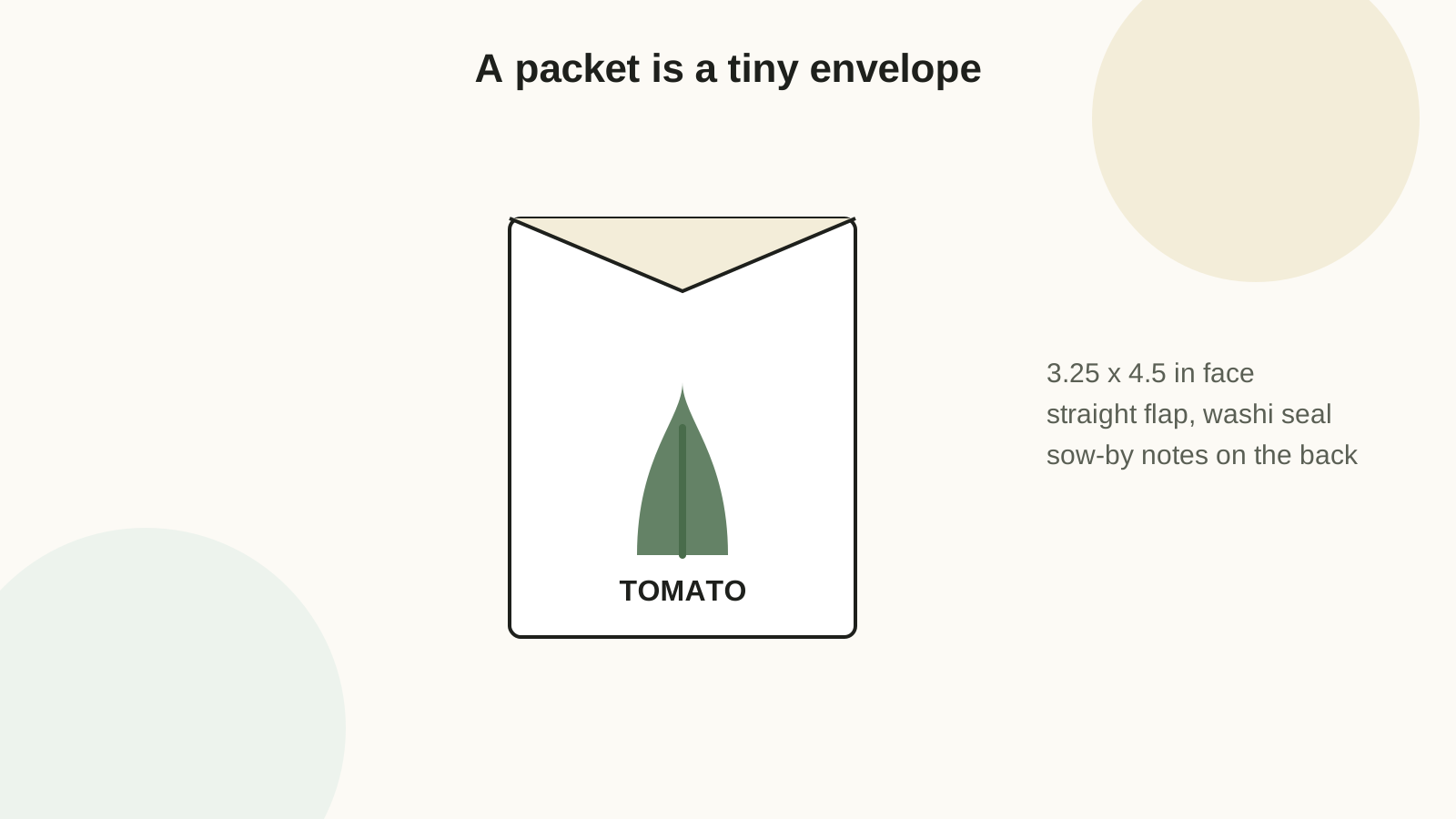
Download the free seed packet template
One 3.25 x 4.5 inch packet per letter sheet: straight top flap for a washi or sticker seal, glued bottom and side flaps, and faint ruled lines on the face for variety, date, and sow-by notes. Text-weight paper folds it best.
Download template (SVG) Open and print Print at 100% / Actual Size and confirm the 1-inch test square (why this matters). Print the template on the inside face so the outside stays clean for lettering.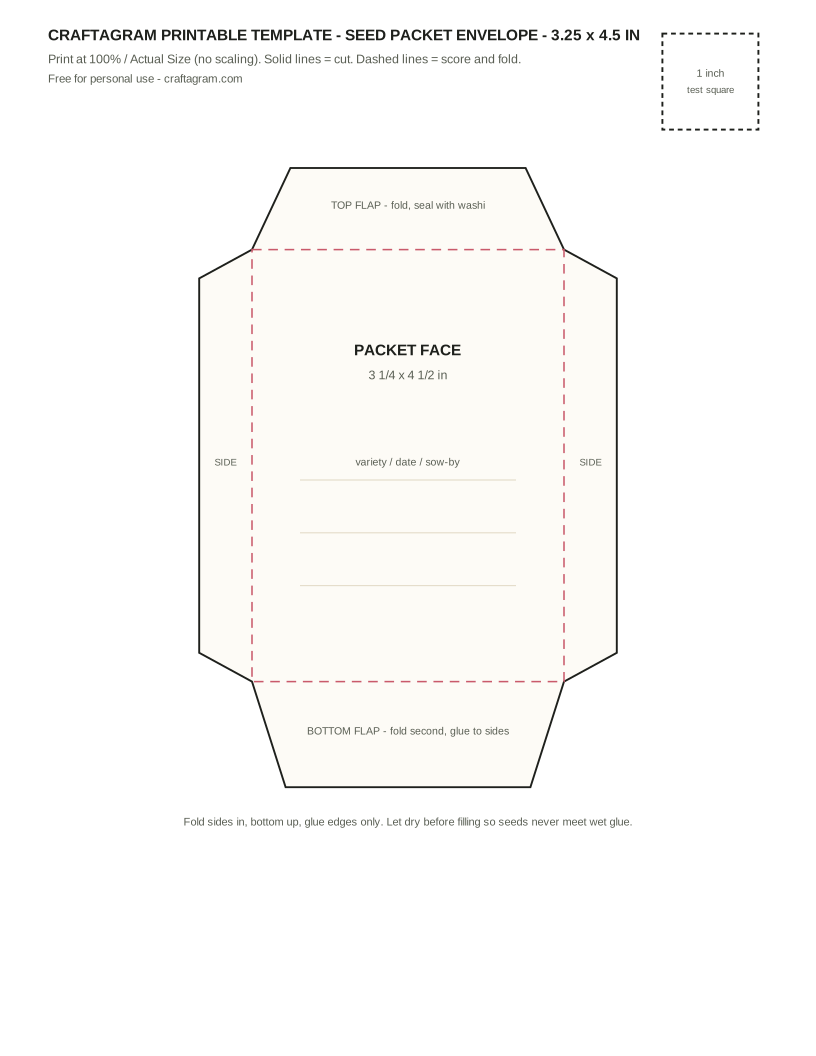
Assembly: three folds, two glue lines
- Cut the outline and score the four dashed lines around the face.
- Fold the two side flaps in.
- Fold the bottom flap up over them and glue along its outer edges only — a thin tape-runner line or barely-there tacky glue. Adhesive in the middle of the packet is where seeds get stuck.
- Let it dry completely before filling. Seeds and wet glue are a bad combination twice over: moisture harms the seeds, and seeds embedded in a glue seam tear the packet at opening.
- Fill, fold the top flap, and seal with washi tape or a sticker — both reopen cleanly for sowing and reseal for leftover seeds. Permanent glue on the top flap means tearing the packet (and its notes) to plant.
What to write on every packet
The difference between saved seeds and mystery dust is five lines of writing, filled in at packing time while you still know the answers:
| Line | Example | Why it earns its space |
|---|---|---|
| Variety, specifically | "Cherokee Purple tomato" | "Tomato" is not information in March. |
| Harvest date | "Sept 2026" | Viability is counted from this date. |
| Sow-by estimate | "Best by 2030" | Tomatoes keep 4-6 years; onions 1-2. Write the answer now so future-you doesn't research it. |
| Depth and spacing | "1/4 in deep, 24 in apart" | Turns the packet into its own instructions. |
| One observation | "From the plant that shrugged off blight" | The note that makes saved seed better than bought seed. |
Use pencil or permanent ink. Ordinary rollerball ink can ghost after a year in a humid shed, taking the variety name with it.
Storage: the packet is half the system
Paper is actually the right material — it breathes, letting residual moisture escape where a plastic bag would trap it. But paper does nothing about temperature and humidity, so the packets need a home: an airtight tin or jar in a cool, dark, stable place. The classic setup is packets upright in a lidded box with a silica gel packet, in a closet away from the kitchen's heat swings. Refrigeration extends viability further but only in a truly airtight container — a fridge is a humidity machine, and packets going in and out of it collect condensation.
Rough viability expectations, assuming cool-dry storage: lettuce and brassicas 3-5 years; tomatoes and peppers 4-6; beans and peas 3-4; squash and cucumbers 4-6; onions, leeks, and parsnips 1-2. Whatever the crop, seeds packed bone-dry outlast the table; seeds packed slightly damp beat none of it.
Forty packets at one per letter sheet is forty sheets of text-weight paper — about half a ream of the cheap stuff, under the cost of a coffee. Batch the work in stages: print and cut one evening (roughly 90 minutes with a trimmer), score-fold-glue the next (about two minutes per packet), then fill and label as the seeds come in. For a swap, add your name to the observation line — provenance is half the fun of swapped seed — and bring blank spares: the gardener with unlabeled envelopes of "definitely something good" appears at every swap.
Favor and gift variations
The same template makes wedding and party favors — wildflower mix, basil, forget-me-nots — with two adjustments. Print or stamp the front before assembly while the sheet is flat, and move up to 65 lb cover if the packet needs to survive a purse ride home (score firmly; the weight guide explains why cover stock demands it). A 3/16 inch hole punched in the sealed top corner takes twine for hanging on a favor board — the same punch-and-loop as the gift tag project.
Seeds that bend or dent when pressed with a fingernail are not dry enough to pack. Air-dry on a plate for another week — the packet can wait; mold cannot be undone.
FAQ
Can I make the packet bigger for beans or bulbs?
Yes — the packet is a scaled envelope, so redraw rather than rescale: face size to fit the contents plus 0.5 in, side flaps ~15% of the width, bottom flap ~25% of the height. The general method is in the DIY envelope guide. Beyond about 5 x 7 in, move up to text-weight kraft for tear resistance.
Glassine or paper?
Glassine (the translucent archival paper) shows the seeds and resists grease, but takes glue poorly and handwriting worse. A practical hybrid: glassine inner fold for tiny seeds, this paper packet as the labeled outer.
How many seeds per favor packet?
Enough for a real planting, not a gesture: 15-20 wildflower pinches, 8-10 basil, 5-6 squash. Cheaper than it sounds — one commercial packet often refills six favor packets.