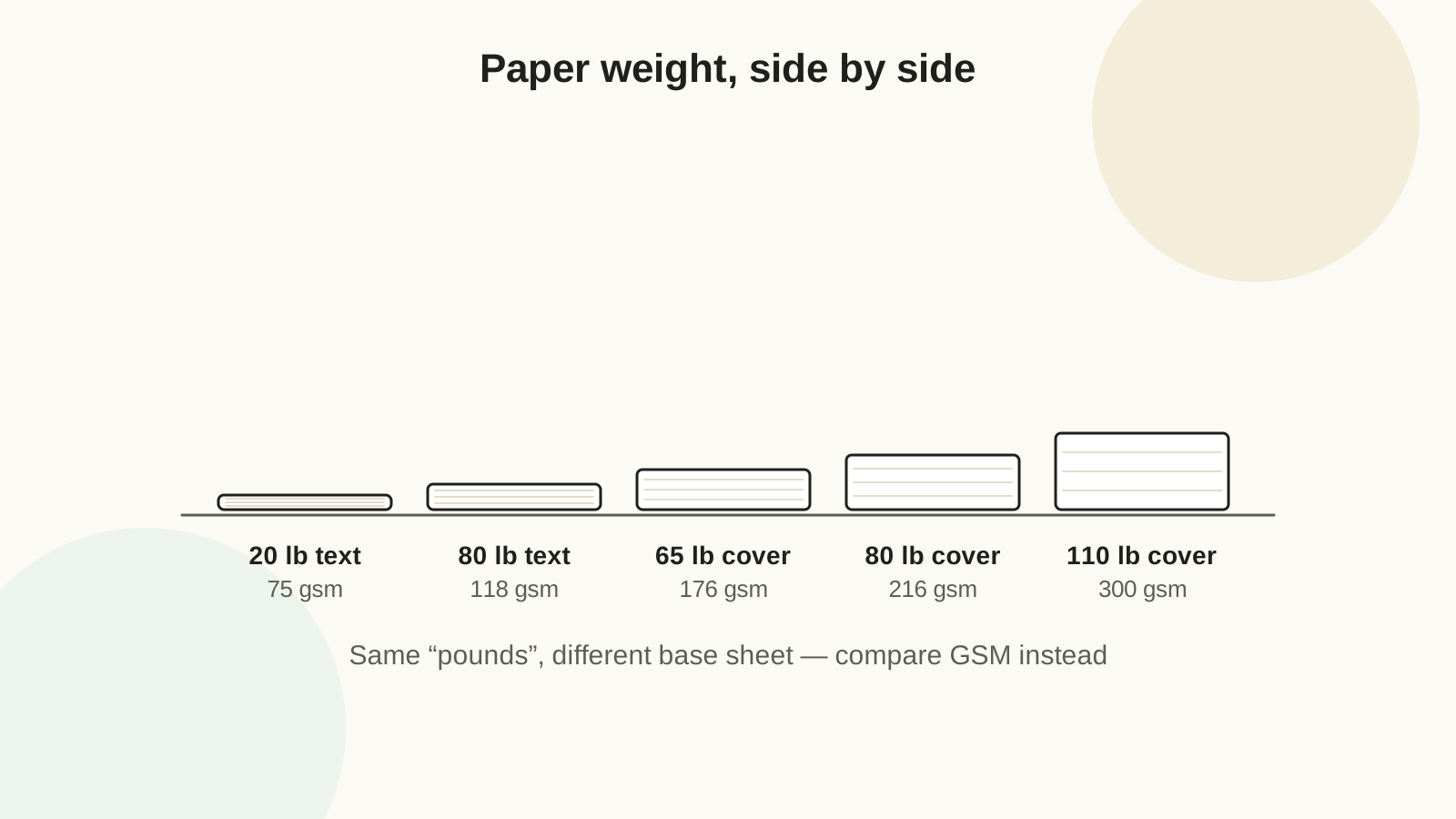
Why a 65 lb sheet can be thicker than a 100 lb sheet
US paper weight is the weight of 500 sheets at the paper's base size — and different paper categories use different base sizes. Text paper is weighed at 25 x 38 inches, cover at 20 x 26, index at 25.5 x 30.5. So "100 lb text" (a big base sheet) is thinner than "65 lb cover" (a small base sheet), and "110 lb index" is only about as stiff as 74 lb cover. The label number alone tells you almost nothing across categories.
The escape hatch is GSM (grams per square meter), which most packs now print somewhere on the label. GSM measures the same square meter regardless of category, so it is the only number worth comparing between brands. Memorize one anchor: 216 gsm = 80 lb cover = the everyday craft cardstock. Judge everything else against it.
The conversion table worth bookmarking
| Common label | GSM | Feels like | Craft role |
|---|---|---|---|
| 20-24 lb text (copy paper) | 75-90 | Printer paper | Drafts, templates, origami, envelope liners |
| 70-80 lb text | 105-120 | Nice flyer | Envelopes, folded inserts, fringe flower centers, quilling |
| 65 lb cover | 176 | Greeting card | Beginner flowers, garlands, light tags, folding boxes |
| 80 lb cover | 216 | Sturdy card | The default: tags, cards, banners, favor boxes |
| 100-110 lb cover | 270-300 | Postcard-stiff | Premium cards, place cards, box bases, backing discs |
| 110 lb index | 200 | Between the covers | Cheap bulk stock — fine for tags, cracks on tight folds |
Match the weight to the project
| Project | Start with | Change if… |
|---|---|---|
| Layered paper flowers | 65-80 lb cover | Lighter for tiny petals, heavier for wall flowers — details in the flower-specific guide. |
| Gift tags | 80 lb cover | 100 lb when tags get handled a lot or carry thick ribbon. |
| Favor and gift boxes | 80-100 lb cover | Drop to 65 lb for boxes under 2 inches — heavy stock springs open at small fold radii. |
| Printable inserts and cards-in-envelopes | Text weight or 65 lb cover | Text weight whenever the piece must fold flat inside something. |
| Garlands | 65 lb cover | 80 lb for 4 in shapes that must hang flat in photos. |
Grain direction: the fix for mystery cracking
Every machine-made sheet has a grain — the fibers align in one direction. Fold or curl with the grain and the paper cooperates; fold against it and the surface cracks even at moderate weights. Find the grain by gently flexing the sheet both ways: it bends noticeably easier parallel to the grain. If petals crack or a box corner splits and the weight seems right, rotate the template 90 degrees on the sheet and cut again — that fixes it more often than changing paper.
Solid-core versus white-core
Colored cardstock comes in two constructions. Solid-core is dyed through the sheet, so cut edges match the surface. White-core is a colored surface over a white middle, and every cut edge shows a white line. For flat prints it does not matter; for anything three-dimensional — flowers, boxes, layered tags — white edges make handmade work look unfinished. The label usually says; if it does not, cut a corner and look.
Working with the heavy end
Above 80 lb cover, folding by hand tears the outer fibers into a fuzzy line. Score first, always — scoring board, bone folder, or an empty ballpoint against a ruler — pressing a deep valley, then fold away from the valley so the score ridge ends up on the outside of the crease. The fibers compress inward instead of tearing. For tight curls in heavy stock, a barely-damp fingertip wiped on the back of the piece softens the fibers enough to bend without cracking; let it dry before gluing.
The three-test check for any new pack
- Print test: print or write on one sample. Watch for feathering ink, smudging, and roller marks.
- Fold test: score and fold a narrow strip both with and across the grain. White stress lines mean brittle stock.
- Glue test: glue two scraps and wait ten minutes. Coated and glossy sheets sometimes release exactly when the project is done.
Three minutes of testing saves a batch. Cardstock varies between brands, between colors within a brand, and occasionally between reams of the same product.
When the wrong paper is already on the table
Too light: laminate it to a backing sheet with a glue stick and a brayer (or rolling pin), or demote it to decorative tops over structural stock. Too heavy: simplify — fewer tight curls, wider tabs, scored lines instead of sharp hand creases. Most projects survive wrong paper if the paper is reassigned to a job that suits it; what fails is asking copy paper to be a box wall or 110 lb cover to be a small petal.
Before buying a ream, feed one sheet through your printer's rear or manual tray. Most home inkjets with a curved paper path jam above roughly 85 lb cover; a rear feed that keeps the sheet flat handles more. One test sheet beats a returned ream.
FAQ
Is 80 lb cardstock the same in every store?
No — even at the same nominal weight, sheets differ in stiffness, coating, and core construction. Compare GSM when the label shows it, and trust the fold test over the number.
What weight is best for cutting machines?
65 to 80 lb cover. Lighter stock tears on intricate cuts; heavier stock dulls blades and needs multiple passes. Textured heavy stock is the hardest case — new blade, slow speed, test cut.
What about vellum, watercolor paper, and chipboard?
Specialty stocks play by their own rules: vellum shows every adhesive mark (use hidden tabs or eyelets), watercolor paper is heavy but soft and folds badly (use it for flat pieces that get wet media), chipboard is structure only. Test adhesive on every specialty sheet first.