The short answer
65 to 80 lb cover cardstock makes most paper flowers. It is sturdy enough to hold a petal curve, flexible enough to shape around a pencil, and cheap enough to waste a sheet learning. Everything below is about when to leave that range — which is decided almost entirely by the finished flower's size.
Weight by bloom size
| Finished flower | Best starting weight | Why |
|---|---|---|
| Under 3 in — mini blooms, favor toppers | 65 lb cover | Small petals need movement; heavier stock looks chunky and fights tiny curls. |
| 5-6 in — gift toppers, bouquets | 65-80 lb cover | Holds shape without heavy glue; the range of the free petal template. |
| 8-12 in — table flowers | 80 lb cover | Petals stay lifted through handling and transport. |
| 12 in and up — wall installations | 80-100 lb cover | Oversized petals need structure; score or pinch every petal base. |
| Any size — fringe centers, cherry blossoms | Text weight (90-120 gsm) | Flexibility is the feature; centers roll tighter in lighter paper. |
Backing discs, stems, and leaves happily take the heaviest scrap on the table — 100 lb cover or chipboard — because they are structure, not petals.
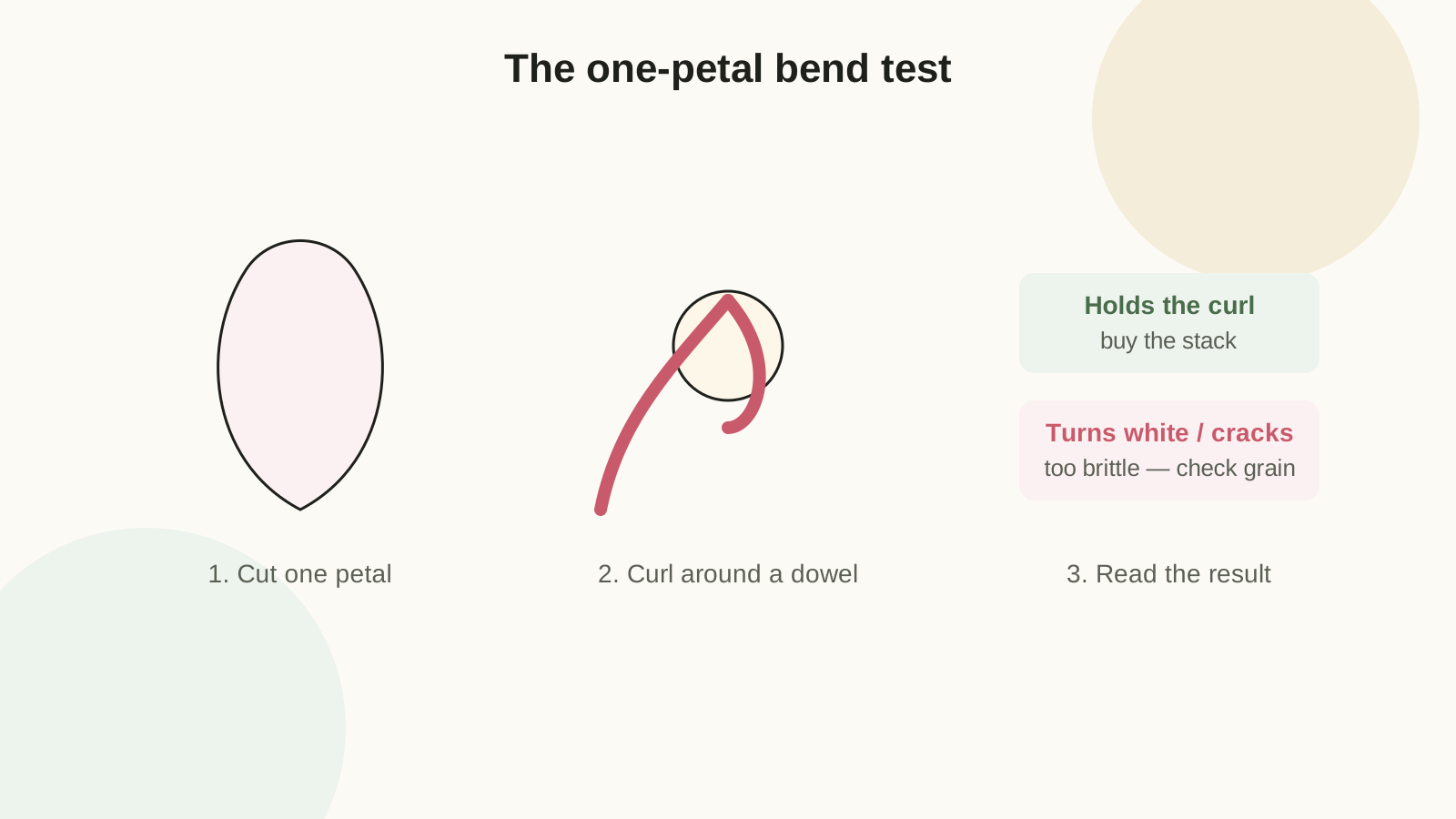
The bend test: sixty seconds, one petal
Cut a single petal from the candidate sheet. Curl the top edge around a pencil, then pinch the base into a pleat. Read the results:
- Paper turns white along the curl — too brittle for tight shaping. Try curling with the grain (rotate the template 90 degrees) before rejecting the sheet.
- Curl falls flat within a few minutes — too light for that petal size. Move up a weight or shrink the flower.
- Curl holds and the base pleats without cracking — buy the stack.
Shaping technique changes with weight
| Weight | How to shape it |
|---|---|
| Text weight | Finger-curl only; tools overwork it. Roll fringe strips around a skewer. |
| 65 lb cover | Draw the petal edge over a dowel while your thumb presses lightly — one smooth pass beats repeated small tugs. |
| 80 lb cover | Warm the sheet in your hands and flex it gently both ways before curling to relax the fiber stiffness, then dowel-curl. |
| 100 lb+ | Curl gradually around a wide dowel first, then tighter; for stubborn cracking, wipe a barely damp finger across the back of the petal, shape, and let it dry before gluing. |
Grain: why identical petals crack differently
Cardstock has a fiber grain running one direction through the sheet. Petals cut with their curl running along the grain shape smoothly; petals cut across it crack at the same weight. If half your petals from one sheet crack and half do not, that is the grain talking — rotate the template so every petal's long axis runs the same way, and test which orientation curls cleanly on that sheet first.
Solid-core or the white-edge problem
Colored cardstock is either dyed through (solid-core) or a colored surface over a white middle (white-core). Flowers are all cut edges — dozens of them at eye level — and white-core stock outlines every petal in a thin white line. It reads as unfinished on dark colors especially. Solid-core costs slightly more and is worth it for anything dimensional; check the label or cut a test corner. (The broader label-decoding — lb versus GSM, text versus cover — is in the cardstock weight guide.)
Finishes to be careful with
Glossy and pearl coatings resist glue — scratch the glue area with scissors tips first, or switch to hot glue. Linen and canvas textures look organic but crack on tight curls; keep the texture on the visible face and glue to the smooth back. Glitter cardstock sheds at every cut edge and will not curl at all; use it for flat backing layers, never petals.
Printer and cutting machine notes
If templates print directly onto the cardstock, confirm the feed before choosing a heavy weight — many home printers handle 65 lb cover reliably and jam at 100 lb (the rear-tray workaround is in inkjet vs laser for printables). On cutting machines, 65-80 lb cover cuts intricate petals cleanly; heavy textured stock needs a deeper blade, a fresh mat, and one sacrificial test petal before you commit a sheet.
Storage and transport
Finished flowers flatten when stacked tightly. Store them one layer deep in shallow boxes with tissue between layers, away from humidity — damp air relaxes every curl you shaped. Large wall flowers travel best with centers detached; add heavy or raised centers after arrival.
Make one complete flower at the smallest and largest size you plan. A stock that is perfect at 5 inches can look bulky in a tiny center and floppy in a large outer petal — one sheet of testing prevents a mixed-weight shopping trip mid-project.
FAQ
Why does my cardstock crack when I curl it?
Usually grain direction — rotate the template 90 degrees and try again. If it still cracks, the stock is too brittle for the curl radius: move down a weight or curl around a wider dowel.
Is textured cardstock suitable for flowers?
Yes, with two rules: texture faces out (adhesive grips the smooth back better), and expect tighter curls to crack — reserve textured stock for larger, gently shaped petals.
Can I use scrapbook paper for 3D flowers?
Patterned scrapbook paper is usually text-to-light-cover weight and often white-core. It works laminated to a solid backing sheet, or for small blooms where movement matters more than structure.