How the two main bonds actually work
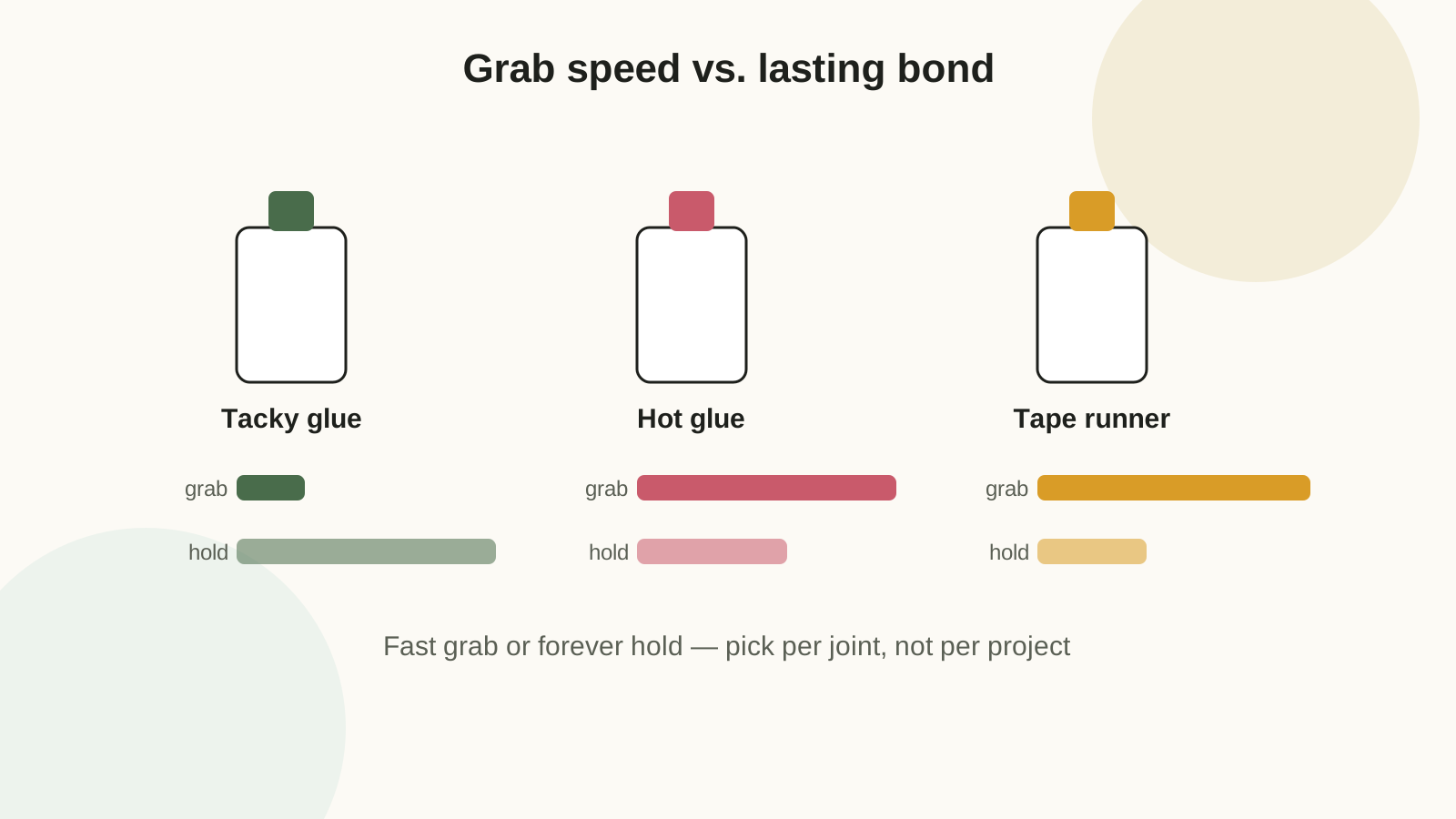
Understanding the chemistry saves real assembly time. Hot glue bonds mechanically by cooling from molten to solid — it grabs in about 3 seconds and cures in 15, which is why it feels instant. But that bond can turn brittle and release with temperature swings (a garage-stored backdrop in summer, a flower shipped in winter). Tacky PVA glue bonds by moisture evaporation, pulling the paper fibers together as it dries — 15 to 30 seconds to grab, about two hours to full cure, and the finished joint stays slightly flexible for years. Fast-and-rigid versus slow-and-permanent is the real trade underneath every recommendation below.
The comparison, all in one table
| Adhesive | Grab / full cure | Best use | Watch for |
|---|---|---|---|
| Tacky glue | 15 s / 2 h | Medium flowers, layered petals, beginner batches — the default | Hold each layer a few seconds so petals do not slide |
| Low-temp hot glue | 3 s / 15 s | Large wall flowers, heavy centers, deadline assembly | Thick bumps keep inner petals from seating; strings everywhere |
| Glue dots | Instant | Tiny centers, beads, classroom and party prep | No repositioning — first placement is final |
| Tape runner | Instant | Flat leaves, backing circles, wrapping stems | Curled petals under tension peel back overnight |
| Thin liquid glue | 30 s / hours | Text-weight paper, delicate rolled centers | Moisture wrinkles petals fast — use sparingly |
Not recommended: school glue. Its high water content saturates paper fibers, so thin cardstock warps, wrinkles, and drops its curl before the bond even sets.
Match the glue to the maker
Kids and classrooms: glue dots and tacky glue — nothing hot, nothing that strings. Adult party-prep batches: low-temp hot glue is fastest if every petal is already cut, shaped, and sorted; the gun punishes disorganization. Quiet evening crafting: tacky glue gives the cleanest result because every petal can be nudged for a few seconds before the bond claims it. High-temp glue guns stay in the drawer for paper — they burn fingertips during tight center work and their thick beads cool into lumps.
Three joint-stability tricks
- The base pleat. Pinch a tiny fold at each petal base before gluing (the petal template guide builds this into shaping). The pleat creates a flat shelf for the glue, so petals stop sliding out of alignment while liquid glue cures.
- The five-second clamp. With hot glue, hold the joint a full five seconds. Releasing early stretches the still-molten core into weak threads — the loose petals you find the next morning were all released at second two.
- Belt and suspenders for stems. Where a flower meets floral wire, use a spot of hot glue for the instant hold plus a thin smear of tacky glue around it for the long-term bond. Each covers the other's weakness.
Centers first with tacky glue — they cure while you shape petals. Petal rings with tacky glue in assembly-line passes (all large rings, then medium, then small), about 90 seconds of active gluing per flower. Mounting discs on the back with hot glue, because the disc joint carries the wall load and benefits from the rigid bond. Total adhesive: one 4 oz bottle of tacky glue and four hot glue sticks — with the tacky bottle doing 90% of the work.
Hiding the evidence
Keep adhesive low on each petal base where the next ring covers it. If glue shows at the center, cover it with a punched circle, fringe strip, bead, or one extra small petal — additions read as design; visible glue reads as mistake. For hot glue strings, wait until the flower fully cools, then lift the threads with tweezers or melt them invisibly with a hair dryer on low. Rubbing strings into the paper while warm smears them permanently. Keep a swab of rubbing alcohol nearby to keep the gun nozzle string-free between joints.
When the paper fights the glue
Wet glue warping thin paper is the most common failure: switch to a drier adhesive (dots, runner), use less, or move up a cardstock weight — the flower cardstock guide pairs with this page. Glossy and pearl-coated stocks resist water-based glue entirely; scratch the glue area with scissors tips first or switch to hot glue. If a bond releases cleanly after drying, the coating never let the glue reach paper fiber — that sheet needs hot glue or nothing.
A pea-sized dot is enough for a petal base. Extra glue does not make the flower stronger — it soaks the paper, raises lumps between layers, and doubles drying time.
FAQ
Can I use hot glue for the entire flower?
Yes — low-temperature only, applied as small dots, with the five-second clamp. Expect a slightly bulkier center than tacky glue produces, and keep the finished flowers away from hot cars and radiators, which re-soften the joints.
What glue attaches paper flowers to walls?
None directly. Glue a flat cardstock disc to the flower's back with hot glue, then put mounting tape or hook-and-loop dots on the disc. The wall interface stays removable and the flower stays undamaged.
How long before glued flowers can be transported?
Hot glue: as soon as it cools. Tacky glue: give the final joints two hours, overnight if the flowers will be boxed petal-down. A flower that feels set at 20 minutes can still shift under its own weight in a warm car.