Download the free place card sheet
Four tent cards per letter sheet, each 3.5 x 4 inches flat folding to a 3.5 x 2 inch tent. The center score line is marked, the back panel is labeled (it prints upside down on purpose — it faces away when folded), and a faint baseline keeps handwritten names level.
Download template (SVG) Open and print Print at 100% / Actual Size and confirm the 1-inch test square — the printing guide covers the settings.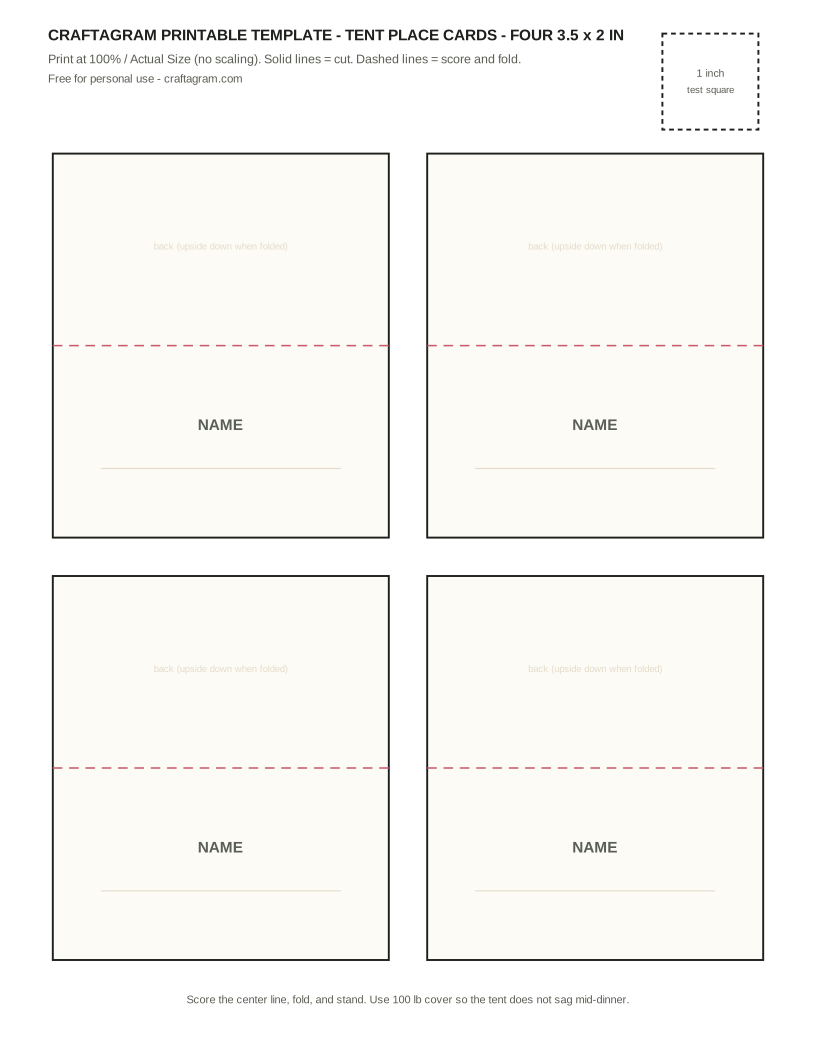
The physics of standing up straight
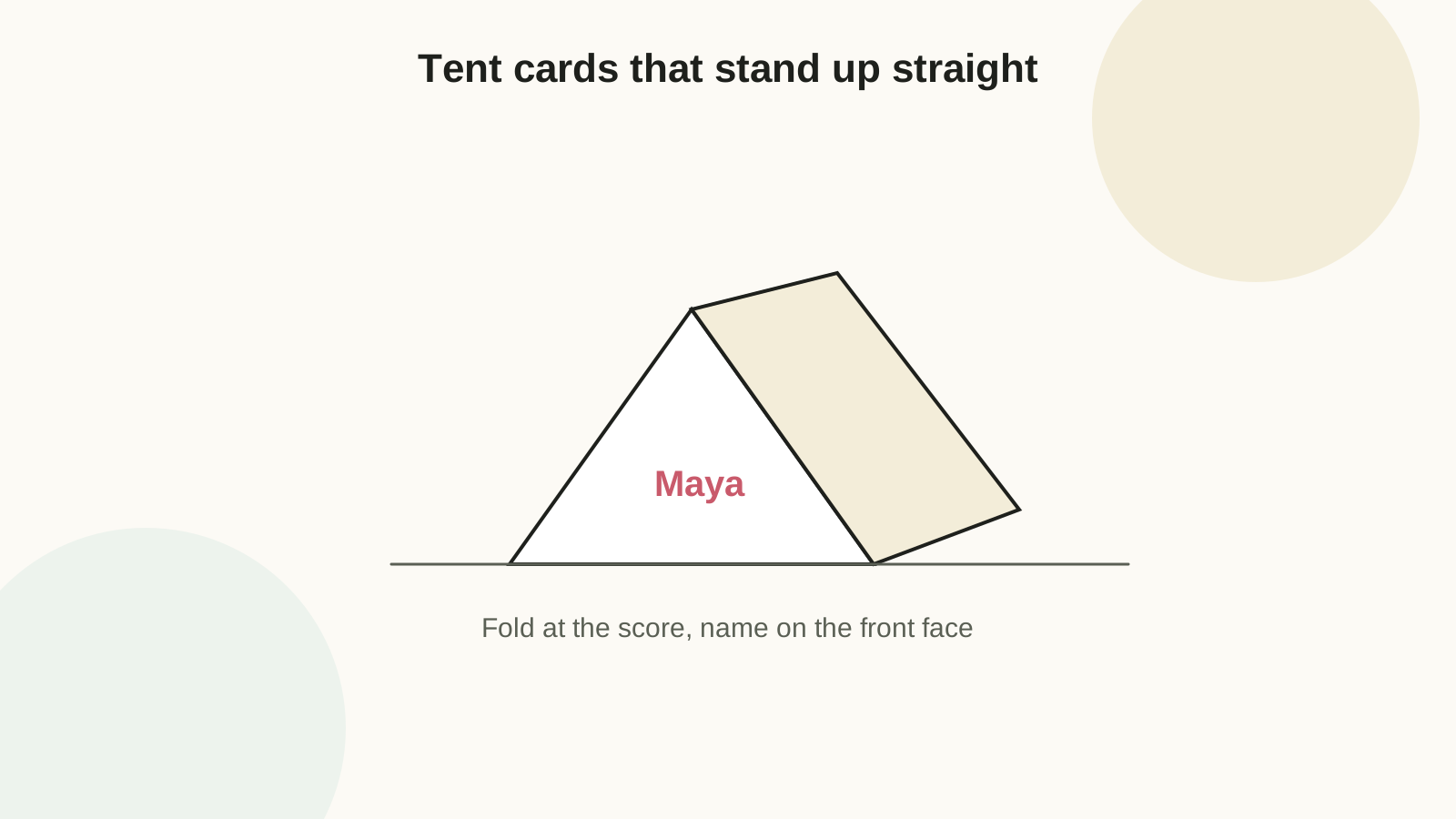
A tent card is a triangle held up by a crease, and everything follows from that. Paper: 100 lb cover is the honest minimum — 65 lb tents sag into a droop by the salad course, especially in humid rooms. The score: fold away from the scored valley so the crease compresses cleanly (the fiber mechanics are in the cardstock guide); a cracked crease is a hinge that keeps opening. The angle: fold to about 75-80 degrees, not fully flat and springing back — a card folded past its final angle and relaxed into position holds all night. If a card still splays, a glue dot inside the bottom edges locks the base.
Names that read across a table
- Size: lettering should be at least 1/2 inch tall — a name has to work at a glance while guests circle the table with drinks.
- First names large; add surnames smaller underneath only when duplicates demand it. "MAYA" beats "Ms. Maya Chen-Okafor" at three feet.
- Contrast wins: dark ink on cream or white. Metallic pens on kraft photograph beautifully and vanish in candlelight — if you want gold, use gold on white, not on brown.
- Both sides? For round tables, letter the back panel too (rotate the card 180° before writing — the template's back prints upside down so it lands upright when folded). Guests approaching from behind find their seat without orbiting.
- Hand or print: handwriting in one consistent pen reads warmer and absorbs late RSVP changes; printed names demand a finalized guest list and a registration test print.
90 cards ÷ 4 per sheet = 23 sheets of 100 lb cover, plus three spare sheets — and the spares matter more here than in any other project: name misspellings and week-of guest changes are certainties, not risks. Cut and score all sheets in one 90-minute session, fold nothing yet (flat cards stack and travel better), and letter names over two evenings at about two minutes each. Fold on-site during setup. Bring six blank folded cards and the same pen to the venue: someone's plus-one changed names, and the calligraphy pen at the venue is the difference between a fix and a crossed-out card.
The seating-chart workflow
Place cards fail as a system when the chart changes after the cards are written. Sequence the work: seat assignments final → cards lettered → cards sorted by table into labeled envelopes → envelopes to the venue. Sorting by table at home turns an hour of setup panic into laying out stacks. Skip alphabetical sorting; nobody sets a table alphabetically. And letter the table-number cards (a 5 x 7 flat card on the same stock) in the same session so the set matches.
Beyond dinner parties
The same tent is a workhorse: buffet food labels (letter the dish plus allergens — "LASAGNA / gluten, dairy" is genuinely useful signage), bake-sale prices, craft-fair table labels, conference name tents at double size, and yard-sale pricing. For buffet duty near chafing dishes, laminate or sleeve the cards — steam is a slow rinse, and inkjet-printed labels ghost by the second refill (why toner survives where ink does not: inkjet vs laser).
Decorating without destabilizing
Weight belongs low and flat: a torn-paper accent strip along the bottom edge, a small punched leaf at a lower corner, a thin washi band above the base. Anything dimensional at the top — ribbon bows, wax seals, silk flowers — raises the center of gravity of an object whose entire engineering is "please stay standing." If the design demands a topper, glue the tent closed into a solid triangle first (glue line along the inside bottom edges), which converts the card from a hinge into a prism that can carry it.
Fold one card from your actual stock, letter a name, stand it on the actual tablecloth, and check it an hour later. Sag, splay, and glare all reveal themselves on a schedule — before the batch, not during dessert.
FAQ
Can I print guests' names instead of writing them?
Yes: print the blank sheet, then run it again with names positioned in a word processor (the front-face center is 1.75 in up from each card's bottom edge). Test registration on plain paper first — and remember the back panel prints rotated 180°.
How do I make them match the rest of the party set?
Pull one repeating element — the twine color from the tags, a punched shape from the garland — and put it small and low on every card. One shared motif reads as a designed set; three shared motifs read as a craft store.
What about kids' tables?
Fold the cards, skip the names, and put a crayon at each seat — the place card becomes the activity. 65 lb stock is fine here; nobody at that table minds a sag.