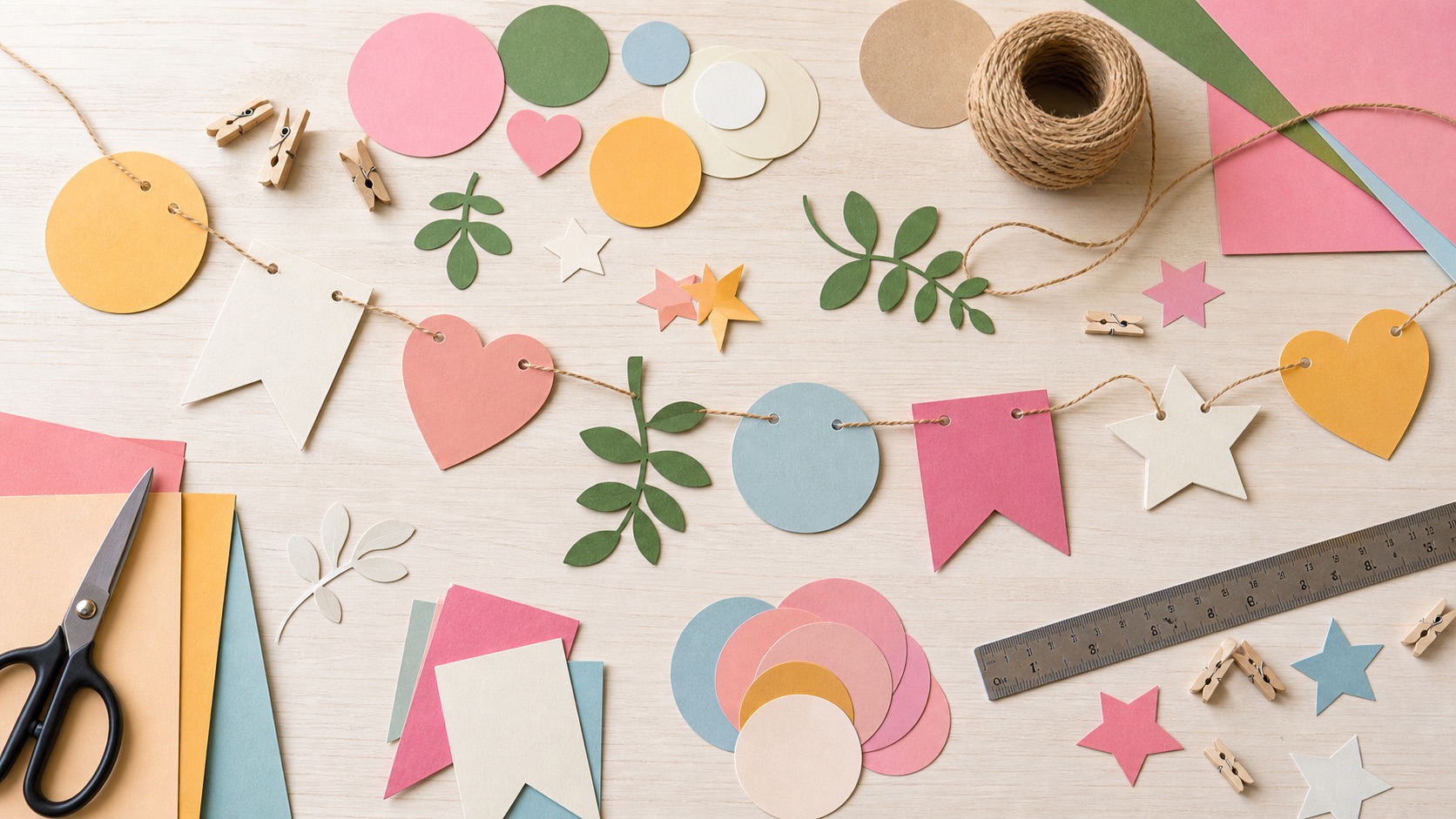
Download the free garland shapes
One letter sheet with the three most reliable repeat shapes at proven sizes: two pennant triangles (3 x 4.2 in with fold-over tabs), two 2.75 in circles, and a diamond. Cut them out and use them as tracing templates for the batch.
Download template (SVG) Open and print Print at 100% / Actual Size with scaling off and check the 1-inch test square. The pennant's dashed line is a fold — the tab wraps over the string, so pennants slide into place and never need holes. Full settings walkthrough: how to print at actual size.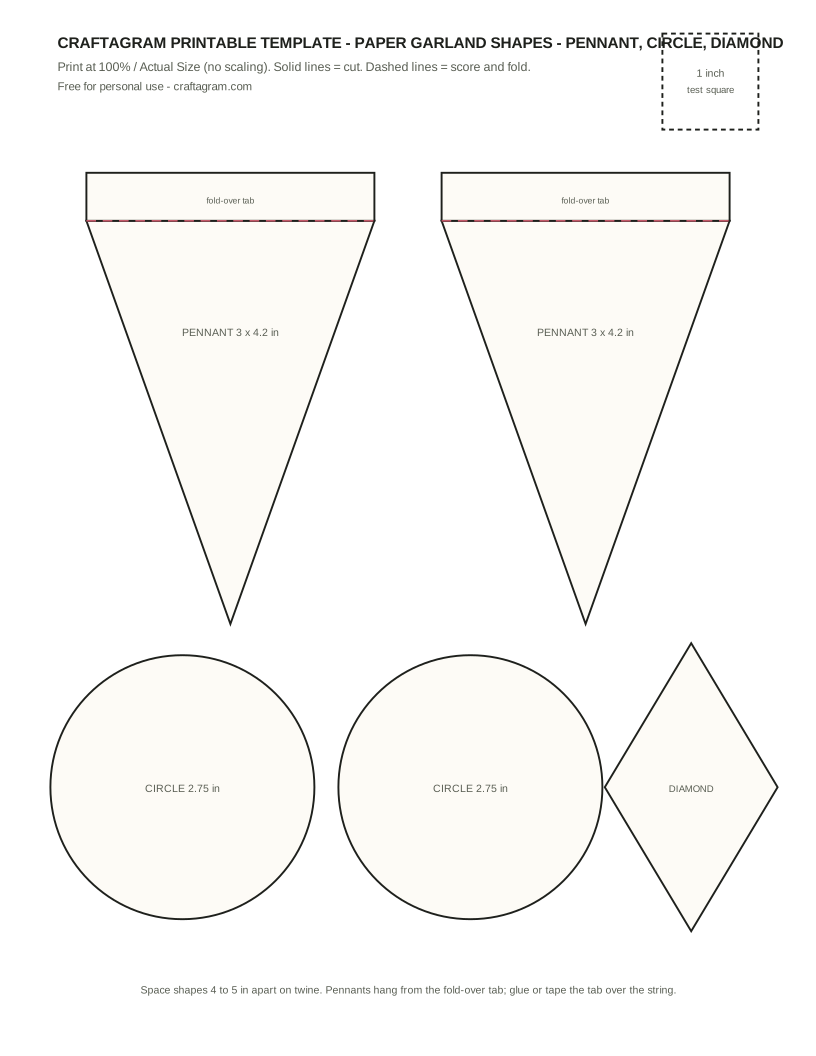
The three decisions that matter
Every garland is three numbers: shape size, spacing, and string length. Get those right and the style — circles, pennants, hearts, leaves — is just taste. Keep shapes between 2 and 4 inches wide: smaller disappears past six feet of viewing distance, larger starts sagging the string.
| Look | Shape size | Spacing | Best for |
|---|---|---|---|
| Full party banner | 3-4 in | 1 in | Backdrops and mantels |
| Light classroom strand | 2-3 in | 2 in | Long walls without stacks of paper |
| Photo booth swag | 4 in | 2-3 in | Shapes that must read in photos |
| Mini cake-table garland | 1.5-2 in | 1 in | Short runs and table fronts |
String length: measure, then add
Measure the span between hanging points, add 12 to 18 inches for tying at each end, then add 10% of the span for drape if you want a soft swag. A tight, straight garland photographs flat; the 10% sag is what makes it look like a garland instead of a clothesline.
Span 120 in + 2 x 15 in tails + 12 in drape allowance = about 162 in (4.5 yards) of twine. Usable decorated length ≈ 132 in. With 3 in circles at 2 in spacing, each repeat is 5 in → 132 / 5 ≈ 26 shapes. If you sandwich-glue front and back circles (see below), that's 52 circles. A letter sheet yields six 3 in circles, so 52 / 6 ≈ 9 sheets — buy 10. Check other shape sizes in the paper yield calculator.
Attaching shapes so they face forward
Garland twist comes from three causes: a single center hole, uneven shape weight, and slick string. The fixes, by shape:
- Pennants: the fold-over tab on the template is the whole trick. Fold the tab over the string and glue or tape it down. The pennant hangs from a hinge, not a hole, so it self-rights.
- Circles and diamonds: punch two small holes near the top edge, about an inch apart, and weave the string in-front-behind. One center hole is a swivel; two holes are a lock.
- Sandwich method (best-looking): cut two of each shape, glue the string between them. Finished on both sides, never slides, never twists — at double the paper cost.
- Sewing machine: feed shapes through on a long straight stitch, leaving 2 in thread loops between shapes. Fastest method for 50+ shapes; the loops become the spacing.
String choice by shape
| Shape | Spacing | String that behaves |
|---|---|---|
| Circles, 2.5-3 in | 1.5-2 in | Baker's twine or cotton cord — texture grips the paper |
| Pennant triangles | 0.5-1 in | 3/8 in grosgrain ribbon or jute — fills the visible gap between flags |
| Paper tassels | 3 in | Hemp cord or waxed thread — holds knots under weight |
| Leaves and snowflakes | 2 in | Monofilament for the floating look; accept some twist |
Color rhythm
Choose a repeat before you cut — blush, cream, green, cream, blush — rather than shuffling a random pile. A repeat looks intentional, and it turns the shopping math trivial: 26 shapes in a 5-color repeat is 6 of each color, plus one spare per color for repairs. Lay every shape on the floor in final order before making holes or gluing tabs; color rhythm is easy to fix while pieces are loose and maddening after the first knot.
Cardstock weight
65 lb cover is the garland sweet spot: flat enough to hang straight, light enough not to sag the string. Use 80 lb only for 4-inch shapes that must stay rigid in photos, and drop to text weight for sewn-machine garlands, where the needle prefers lighter paper. The full weight rundown is in the cardstock weight guide.
Hanging without damage
Tie loops at both ends of the string rather than taping the string itself — loops hook over removable adhesive hooks, curtain rods, or shelf brackets and let you adjust drape without tearing the first shape. On painted walls use clear removable hooks rated for at least a pound; a long cardstock garland with 30 shapes weighs more than it looks.
Place every shape on the floor in order before attaching anything. Spacing and color are much easier to fix while the pieces are still loose.
FAQ
Can I reuse a paper garland?
Yes, if the shapes were not taped directly to the wall. Wrap the garland loosely around a flat piece of cardboard, layering tissue between wraps, and store it flat. Tab-hung pennants and sandwich-glued shapes survive storage best.
How many shapes do I need per foot?
Divide 12 by (shape width + spacing). Three-inch shapes at 2 in spacing ≈ 2.4 shapes per foot. Round up, and cut two spares per color.
Can I make garlands with a cutting machine?
Yes — import the SVG, delete the labels and test square, and duplicate the shapes to fill your mat. The fold-over pennant tab imports as part of the outline, so keep the dashed line as a score if your machine supports scoring.